
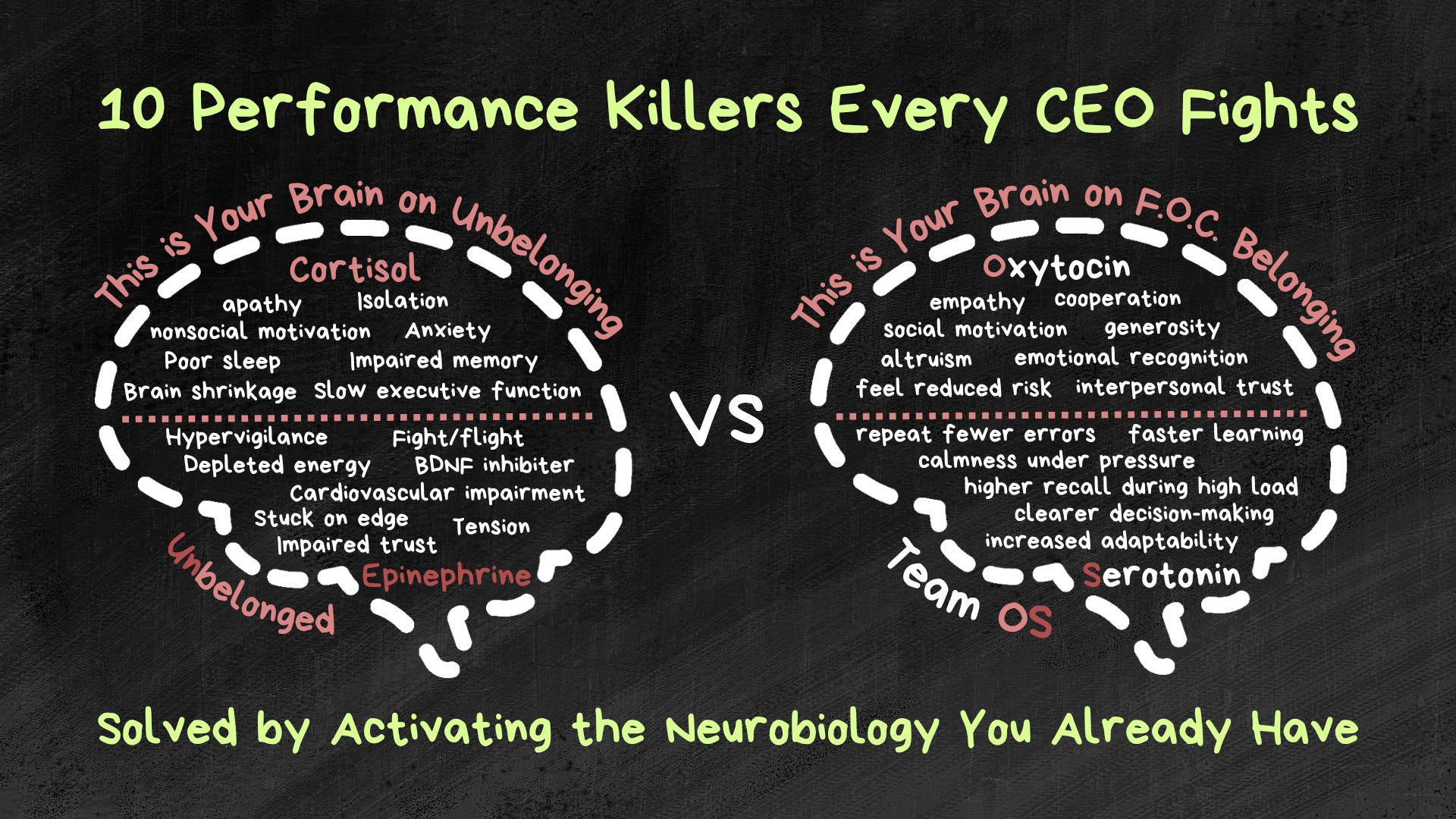
10 Performance Killers Every CEO Fights
Solved by Activating the Neurobiology You Already Have

You’ve tried more pressure. More process. More accountability structures.
And somehow, you’re still watching the same problems resurface every quarter. And, maybe daily. It’s exhausting.
Here’s the reframe: what looks like 10 separate performance problems is actually one problem, wearing 10 different masks. You didn’t make Feel, Own, Care (FOC) Belonging explicit and part of your company culture OS — so your team runs on self-protection instead of Team OS neurobiology.
Fear-of dominates instead of fear-for.
Once you secure FOC Belonging, things don’t improve slowly. They resolve fast — because you’re not managing the symptom anymore, you’re restoring the optimal team operations from our belonging neurobiology that drives elite performance.
FOC isn’t about how you make people feel — it’s about how, when we choose to feel, own, and care for each other, it changes our neurobiology and the outcome.
Now let’s get to those 10 things that are killing your team’s elite performance.
1. Leadership agrees in the room, executes in disagreement out of it
Compliance without belonging is fragile. The moment pressure hits, the private thoughts in self-preservation create it’s every exec for themselves.
The Fix: Build FOC Belonging into the room, not just the vote. Agreement becomes the relational contract, not just a meeting outcome.
FEEL — in mutual empathy, they vulnerably voice the doubt in the room, not after in the shadows
OWN — in accountability, they own the decision as “theirs,” even the parts they didn’t originally pick
CARE — in their choice to execute, they’ve got each other’s backs even under pressure
The Outcome: One of my co-VPs came up to me a few months after we’d all agreed on a path for supporting one of our biggest clients: “I didn’t sign up for that.” We were all in that meeting, and though we weren’t all happy with the options, we all agreed that was the path we’d go forward with.
Now, I’m always scribbling and doodling in our meetings — processing things, taking notes from that day on significant moments. So I pulled out my notes, and because of the type of decision it was, it required all of us to coordinate. I’d made note of each vote. And I had a document from months back, out there, of our agreement.
It was followed by, “I can’t believe I agreed to that.” It wasn’t my documenting that kept things going, though it was helpful. It was the state of belonging on the executive team that allowed for re-inviting a member back into an aligned agreement.
2. Feedback lands as threat, so nobody gives it straight
Without belonging, feedback or critique = threat — triggers a cortisol response. So people soften it, sit on it, or skip it.
The Fix: Anchor the room in FOC Belonging. Critique reads as guiding care, not threat, because the relationship absorbs the hit instead of the ego.
FEEL — in mutual empathy, they trust the feedback comes from someone who’s theirs
OWN — in accountability, they receive it as being built, not a bill they have to pay
CARE — in their choice to say and receive the hard thing, because they’re for each other, not against
The Outcome: “Paul, I need you to get your head out of your ass and back in the game.” Many might say that’s hostile. In good belonging, it’s an invitation to get back right with the team and get in focus — albeit a colorful one, yes. And yeah, I pulled my head out. We had a big relational impasse to work out, and that was my job, even when I was also in a state of relational impasse. The irony.
3. High performers burn out carrying the team
One-directional care — they don’t allow the team to give back — is the fastest route to resentment and exit. I like to call it “The Devil in Servant Leadership.”
The Fix: Commit to FOC Belonging, out loud. The team, even amongst different levels of authority, agrees to have bidirectional required rest and recovery over martyrdom.
FEEL — in mutual empathy, they’re felt for and not just leaned on — they had their leader’s back
OWN — in accountability, the team owns their load too, not just their output
CARE — in their choice to give and receive support and rest, instead of carrying alone
The Outcome: We had a situation where our proserve group was really burning the candle at both ends. Let’s just say, what we thought was going to work didn’t work out. I’m in my office, and one of the proserve employees comes in and says, “Hey, Paul, got a minute? Can we do one of your walks?”
Even then, the company considered me the coach, or the company counselor. And this didn’t sound like something he wanted to talk about out loud, so off we went. “Hey, would you please go to Matilda, and tell her to go home. We’ve got this — she doesn’t need to kill herself.” He explained they’d all tried, but she wasn’t budging. So I went and talked to her, and she agreed to go home and sleep. Because I was familiar, I told the team that if they needed anything at an executive level, to call me, not her. And they got it done. Matilda got her R&R.
4. New hires take 6 to 9 months to get to optimal contribution
Onboarding normally builds process fluency, and ignores belonging. So the “am I safe here / am I theirs” question stays open for months.
The Fix: Agree to FOC Belong before day one, not month six.
FEEL — in mutual empathy, they’re invited before even met, not just processed
OWN — in accountability, they’re handed real relational stakes early, not just busywork
CARE — in their choice to run toward contribution because they already belong
The Outcome: In the first year of setting up operations in India for a startup, we built it in belonging alignment from day one — and ended up with 90+ percent employee retention in that first year.
I wrote the book on this. It’s about a two-hour read, but it breaks down everything to understand and do to have your people belong and be charging forward as a member of your company, driving its purpose, before they’re even hired.
5. Your best people are quietly checked out
Quiet quitting is a belonging deficit wearing a productivity costume. They’re still in the seat. They’re not in the tribe.
The Fix: Restore FOC Belonging. Discretionary effort returns when belonging is secure — you can’t mandate it back.
FEEL — in mutual empathy, they wake up for each other
OWN — in accountability, they get back to offering new and better ways for the company tribe
CARE — in attending to each other, they take action, don’t just give whispering lip service
The Outcome: A couple of our top developers asked to meet me for a private lunch. We were looking at a new CTO. I’m paraphrasing, but they wanted to know if they should just keep their heads down, or even stay with the company. It was our belonging that allowed me to answer their question. They stayed, and returned to doing inspired work again. Later our CFO came out to me and said, “What’s gotten into Carl? He just asked me all sorts of insightful questions about what would make our software product make me, or any CFO, really happy.” He went outside the normal lines to find the answers.
6. Cross-functional projects turn into turf wars
Silos self-protect at the subgroup level. Every department guards its own corral instead of growing and maintaining the ranch.
The Fix: Agree to a shared Us-Story. One tribe, one Strategic Ranch story, instead of competing teams.
FEEL — in mutual empathy, they feel the other team’s pressure, not just their own
OWN — in accountability, they own the shared outcome, not just their department’s slice
CARE — in their choice to run toward the other team’s risk as if it were their own
The Outcome: I walked up to the dev manager on my daily rounds and asked if he needed anything. He said, “Yeah, the Jenkins server has been down, and we have a software release for Verizon. I’m afraid the delay isn’t going to give QA the time to do as good a job as they want. I put a ticket in, but it’s still not working.”
So I told him I’d check with IT. I went over and asked, “What’s the status on the Jenkins server? It’s going to put QA in a bad spot.”
I got oh-shit faces from the team. The lead explained they’d gotten distracted — deep in the security networking between operations for India-US connectivity. I said, “Please give me an update so I can get back to development.” He said he’d have it in 10 to 15 minutes.
I walked back to update the dev manager. Before I could finish saying Hi, he thanked me for getting the Jenkins server back online for him. I thanked the IT Team
Each was looking out for the other, and they had a strong impact on each other.
7. Work gets done, but without ownership
Tasks complete. Outcomes don’t. Compliance replaces commitment, because owning accountability for each other and getting stuff done isn’t part of the calculus.
The Fix: Make FOC Belonging the agreement. Ownership becomes something the team chooses for each other in agreement. So, it’s no longer about enforcing anymore.
FEEL — in mutual empathy, they carry each other’s outcomes, not just their own tasks
OWN — in accountability, they finish what’s theirs for what’s ours, without being asked
CARE — in their choice to stay accountable to each other, they demonstrate caring actions on each other’s behalf
The Outcome: One of my top Linux guys missed a day at work because of the brown bottle flu. I had to let him know that wasn’t acceptable. He gave back no denials, no excuses — just said one thing: it won’t happen again, I let our team down and the company. And he never did.
I’ve given him five different recommendations since, as he’s applied and advanced his career in different roles. If he called me again, or a potential employer did, I’d give another recommendation for him.
8. The same problem resurfaces every quarter
Symptom-fixing without belonging means individuals play the game “Band-Aid-Safe” instead of solving the problem as teammates — so they patch it and move on, and it always comes back.
The Fix: Root it in FOC Belonging, not the patch. Root-cause ownership replaces repeat firefighting.
FEEL — in mutual empathy, they feel the real cost the problem is creating for each other
OWN — in accountability, they own fixing the source, not just the symptom
CARE — in their choice to run toward the harder, slower fix instead of the fast patch
The Outcome: My senior net-admin said it out loud: “Unless we upgrade this ASA, our IPsec tunnels are going to get even more unreliable with our growth and load.” There may have been some expletives in his statement. Our option was to reset the ASA every time it happened, or go through the pain and effort of doing the upgrade and setting us up for stable growth. Did I mention we were expanding globally, and trying not to spend more money than we had?
9. Your smart people go quiet in meetings
Not because they lack ideas. Because they’re self-protecting. Belonging moves us from fear-of into fear-for.
The Fix: Choose FOC Belonging first. Security in belonging changes us.
FEEL — in mutual empathy, they feel for each other
OWN — in accountability, they see each other as teammates, and even their clients
CARE — in their choice to run toward the risk of a new idea or perspective instead of staying self-protecting and quiet
The Outcome: Sheila stepped up, and said the thing that only she could see to transfer my process for elated customers.
10. Change initiatives stall before “buy-in”
Buy-in is a transaction. Belonging is a bond. People don’t resist change itself — they resist changing when they don’t already belong in the tribe.
The Fix: Secure the Belonging Culture Operating System first, and the Organizational Operating System change moves.
FEEL — in mutual empathy, they feel the change is for them, not done to them
OWN — in accountability, they own their part in making it work
CARE — in their choice to run toward the risk of the unknown, because their tribe is going with them
The Outcome: The ways we belong + the ways we get shit done = company culture.
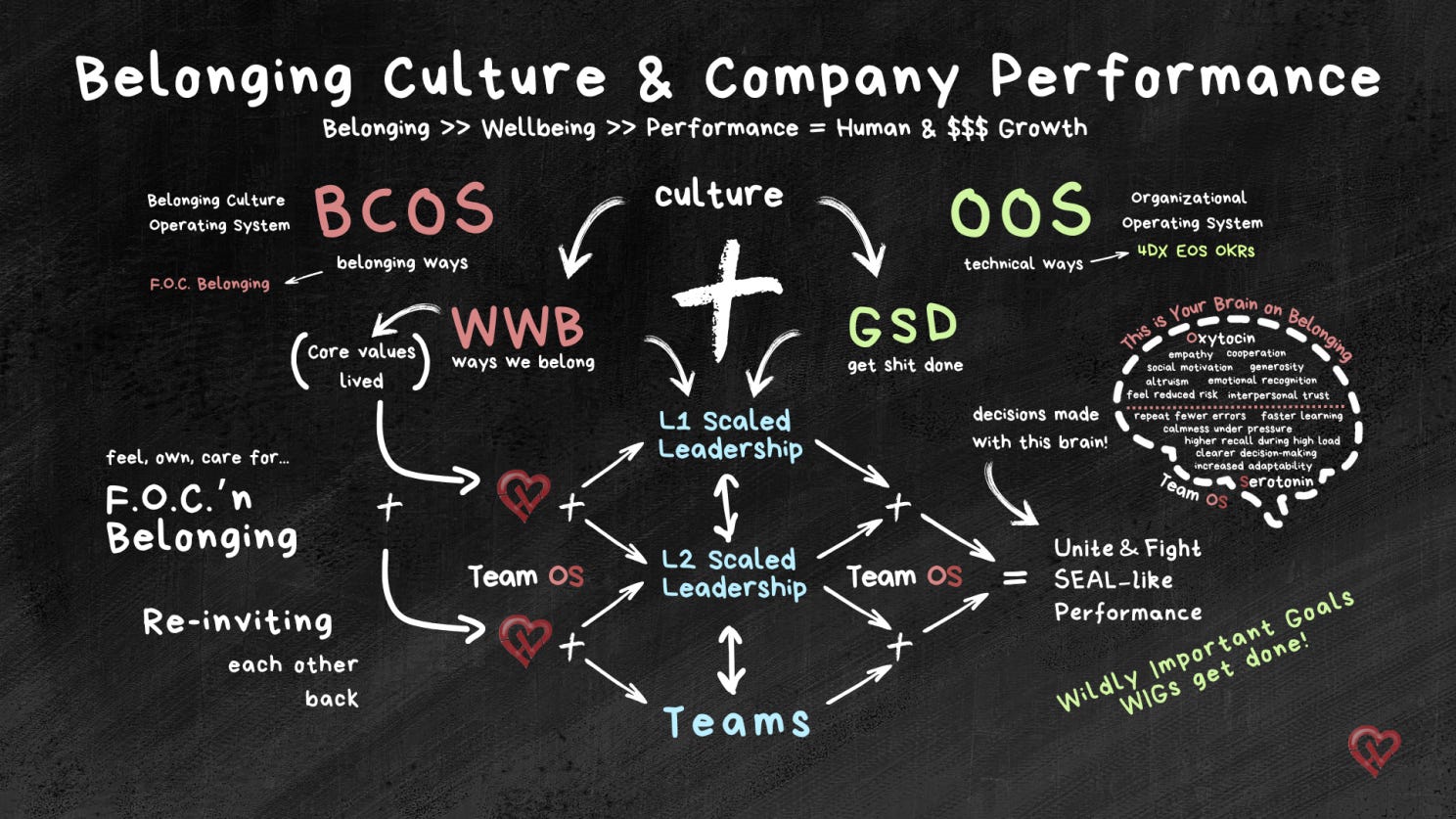
The Pattern Underneath All 10
You can’t pressure your way out of a belonging deficit. You can only build the agreements in belonging your team overlooked or simply didn’t make. This is understandable this isn’t taught in business schools yet.
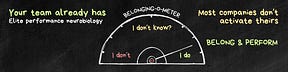
That’s the whole premise behind the Six Belonging Agreements found in the book, Belong & Perform (see above) — and it’s why fixing belonging fixes performance faster than fixing performance fixes performance. It’s neurobiology.
If you recognized your team in more than two of these, that’s not bad luck — that’s a belonging & performance gap running in front of your OOS. Most don’t see it until it’s cost them a key hire, stalled an initiative, or repeated another quarter of watching the same fire get patched instead of permanently put out.
I work with a small number of Founders and CEOs directly on this, not as a workshop, but as an upgrade to your operational culture. If that’s where you are, message me. Let’s talk about your team specifically.
Catch ya, Paul